
Car Wash Facility Roofing in Richmond, VA
Chemical-resistant roofing for express tunnels, in-bay autos, and self-serve car washes across Richmond, VA. We spec membranes that survive detergent vapor and constant interior humidity.
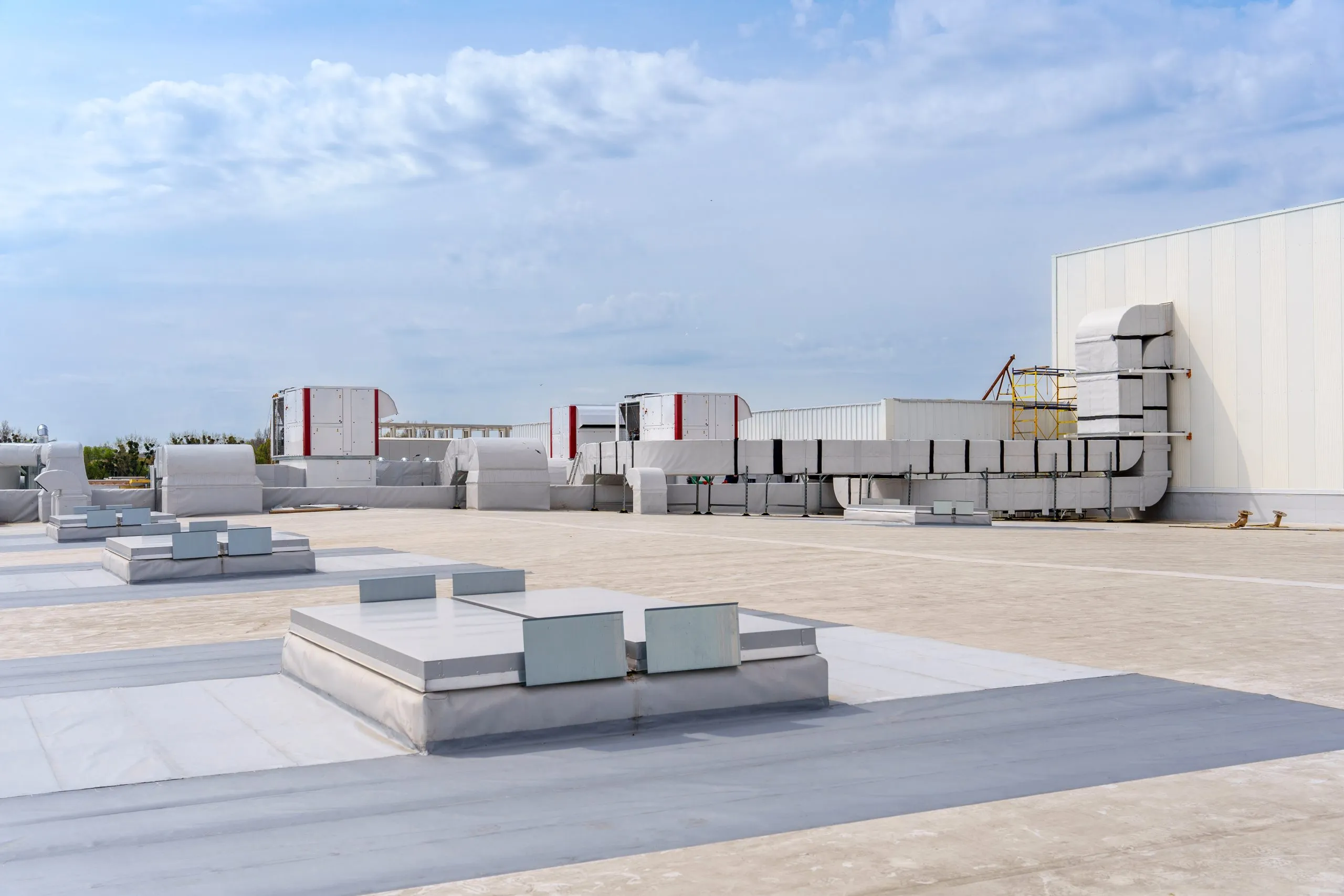
The Roof Over a Richmond Car Wash Fails From the Inside Out
Most commercial buildings wear out their roofs from the top down. A car wash does the opposite. Below the deck, the wash tunnel runs hot water, foaming presoaks, high-pH detergents, drying agents, and tire-shine compounds through the air all day long. That vapor rises, finds the underside of the steel deck, condenses on the cold fasteners, and quietly corrodes the assembly from beneath while the membrane on top still looks fine from the parking lot. By the time a stain shows up on the office ceiling, the deck around a dozen screws has already gone soft. We inspect Richmond car wash roofs for exactly this failure pattern, because it is the one a generalist roofer almost always misses.
Richmond gives the wash business plenty of room to grow. The high-traffic retail runs along Broad Street through the West End, Midlothian Turnpike out toward Chesterfield, and Hull Street to the south all carry the kind of daily car counts that keep express tunnels busy, and the apartment density going up in Scott's Addition and along the Boulevard feeds the self-serve and in-bay locations. New tunnels keep opening on the commuter routes feeding I-64 and I-95. Every one of those buildings puts a roof in an environment that no standard membrane warranty was written for.
The Wash Tunnel Is a Different Roof Than the Rest of the Building
A full car wash property is really three roofs that happen to touch. The tunnel or wash bay is the hostile zone. The equipment and mechanical room behind it is a normal low-slope roof. The retail lobby, offices, and pay-station area are ordinary commercial roof. Treating all three the same is the mistake that shortens the life of the part that matters most.
Why detergent chemistry decides the membrane
The alkaline detergents and wax solvents in a modern wash program are hard on single-ply roofing, and they do not attack every membrane equally. We tend to specify PVC over the tunnel because its chemistry holds up to alkaline and oil-based compounds better than TPO or EPDM over the long run. But the right answer depends on what is actually running through the bay. Before we write a spec we ask for the chemical menu the operator runs, match it against the manufacturer's chemical-resistance data, and confirm in writing that the warranty covers those conditions. A standard single-ply warranty usually excludes chemical exposure outright, so this step is not optional on a wash building.
Fastener corrosion is the real enemy
Vapor that gets above the deck goes after fasteners and the screws holding insulation and membrane down. On a mechanically attached system over a wash bay, those fasteners are sitting in a corrosive fog every operating hour. We lean toward fully adhered or fleece-back assemblies in the tunnel to take the fastener field out of the equation, and where attachment is unavoidable we move to coated or stainless fasteners rated for the environment. We also look hard at the vapor barrier and insulation, because stopping the moisture before it reaches the deck matters more than anything we do up top.
Exhaust, Drainage, and the Canopy
A tunnel runs powerful exhaust fans to pull steam and chemical mist out of the building, and those penetrations are where roofs leak first. The continuous airflow and warm, wet, chemical-laden discharge eat through standard pipe boots and undersized curbs. We flash every exhaust stack as its own detail, sized for the equipment and built to take the discharge plume, rather than dropping in a catalog boot and hoping.
Drainage is the other quiet killer, and it shows up most on in-bay automatics and self-serve bays where the roof above the equipment was framed flat with no real slope. Water ponds, seams sit underwater, and the membrane ages twice as fast in those spots. We check every drain and scupper and add tapered insulation where the deck won't move water on its own.
The vacuum canopy and entry canopies
Express washes live and die on the vacuum islands, and the canopies over them are a roof too. They take vehicle exhaust, overspray from tire dressing, and full sun and weather with no conditioned space below to buffer the temperature swings. The connection where a canopy ties back into the main building, and the canopy drain lines, are the single most common leak point we find on Richmond express properties. Our scope always includes the canopies, their gutters and downspouts, and every canopy-to-building transition, not just the rectangle over the tunnel.
Working Around a Wash That Never Closes
Richmond washes run seven days a week through most of the year, and a closed tunnel is lost revenue the owner feels immediately. We sequence the work to fit that reality. Tunnel and bay roofing happens in the early-morning or late-evening window when the line is down, and we make sure each section is watertight before the gates open again. Lobby, equipment-room, and canopy work can usually proceed during business hours with traffic control that keeps cars clear of the crew. Nobody should have to shut the wash for a week to get a roof done right.
What You Get From Us on a Car Wash Roof
- An inspection that checks the underside of the deck and the fastener condition, not just the top of the membrane.
- A membrane spec matched to the actual chemical program in your tunnel, with warranty terms confirmed for chemical exposure before work starts.
- Exhaust-stack and penetration flashing detailed for each piece of equipment instead of generic boots.
- Drainage corrections that get standing water off the bays.
- Full coverage of vacuum and entry canopies, their drains, and their tie-ins to the building.
- Phasing geared to your operating hours so the wash keeps running.
Whether you run a single express tunnel off Midlothian Turnpike or a portfolio of in-bay and self-serve sites across the metro, we build the roof for the environment it actually lives in. Call us for a wash-specific roof assessment anywhere in the Richmond area.
Talk to a Richmond commercial roofer
Tell us about the building and the issue. We will set up a roof walk and get you a clear, documented scope.