
Built Up Asphalt in Richmond, VA
Built-up asphalt roofing on Richmond commercial buildings: multi-ply felt-and-asphalt and gravel-surfaced BUR, honest repair-versus-recover guidance, and moisture verification before any scope is priced.
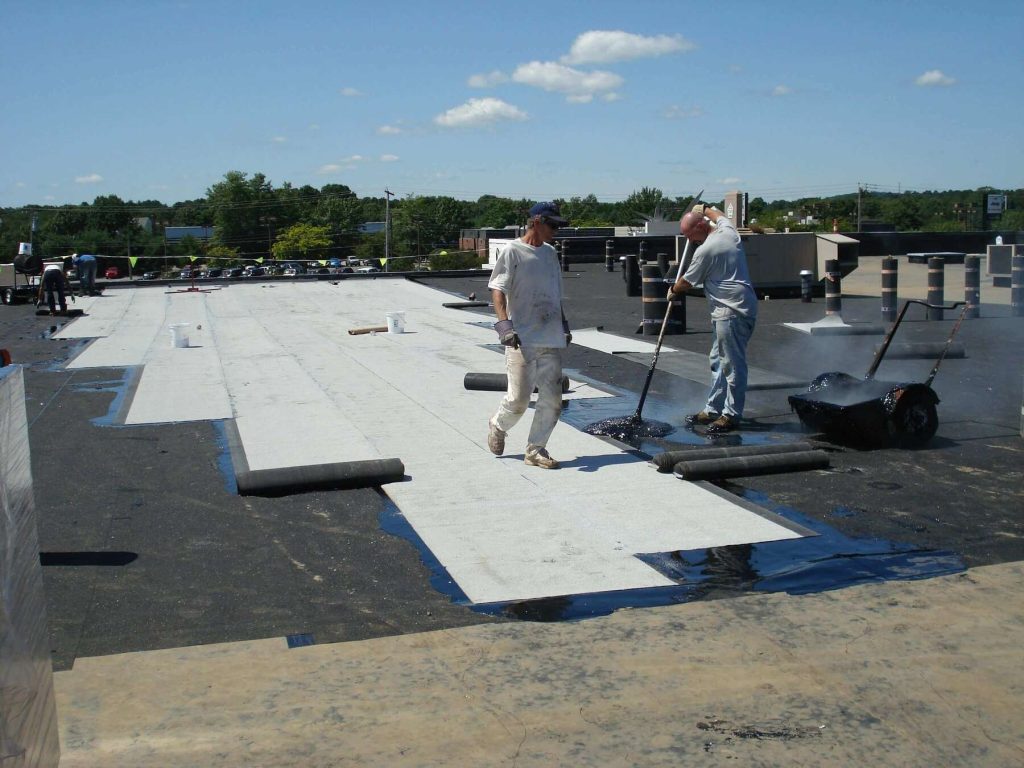
Built-up roofing is the system most likely to be sitting on a Richmond commercial building that has been standing since the middle of the last century. Walk the downtown blocks, the older industrial stock along the Route 1 corridor, the warehouse buildings near the Richmond Marine Terminal, or the mid-century retail and office product scattered through the city, and a lot of those flat roofs are BUR: layer after layer of asphalt mopped between plies of felt and topped with a flood coat of bitumen and a layer of gravel. It earned its long run honestly. A roof built up from multiple waterproofing plies has real redundancy, and a well-maintained gravel-surfaced built-up roof can hold for decades. The reason we get called is that most of the ones still in service are decades in, and the question on the table is whether the roof has another chapter left or whether it is finally done.
What a built-up roof actually is
A built-up roof is assembled in place, ply over ply. Each layer of roofing felt is set into hot asphalt, the next layer goes over it, and the process repeats until the membrane reaches its designed number of plies. The whole assembly is then sealed with a flood coat of asphalt and surfaced, most commonly with embedded gravel that shields the bitumen from ultraviolet light and gives the surface its physical durability. That gravel surface is not decoration. It is the wear layer, and a great deal of how a BUR roof ages comes down to whether that surfacing is still intact or whether the flood coat beneath it has been exposed and started to alligator, crack, and dry out.
Because the system is built from many thin layers rather than one thick sheet, it fails in characteristic places. Blisters form where moisture or solvent gets trapped between plies and expands. Splits open where the deck moves and the membrane cannot accommodate the stress. The flashings at walls, curbs, and the perimeter break down long before the field does, because that is where the membrane has to bend and where the original asphalt has dried hardest. When we walk a built-up roof, those are the conditions we are reading, along with the drainage, the rooftop equipment, and the old repair edges that tell the roof's history.
The real question is repair, recover, or replace
The most expensive mistakes on a built-up roof come from skipping the diagnosis and jumping straight to a scope. A coating does not fix wet insulation. A recover does not belong over trapped moisture. A single patch is not a capital plan. So before we quote anything, we figure out which of three honest answers the roof calls for.
Repair makes sense when the damage is localized and the rest of the assembly is sound. Open and reglaze a failed flashing, cut out and replace a blister or a split, re-secure lifting edge metal, and the roof goes back to work. Recover, which means installing a new membrane over the existing BUR rather than tearing it off, is an option only when the roof underneath is dry and structurally sound and the existing layers do not violate the limit on how many roof systems a building is allowed to carry. The catch is that gravel-surfaced built-up roofs are rough and uneven, so a recover usually requires a layer of cover board or new insulation to give the new membrane a clean substrate, and none of that is worth doing over insulation that is already saturated. Replacement is the answer when the membrane is exhausted across the field, when the insulation is wet through a meaningful share of the roof, or when the deck below has corroded. We do not push a building toward the most expensive option, and we do not sell a patch on a roof that is already past it.
Why moisture verification has to come first
The single condition that decides repair versus recover versus replace is how much water is already trapped inside the assembly, and on a built-up roof you cannot read that from the surface. Gravel-surfaced BUR hides a lot. The membrane can look serviceable while the insulation beneath it is soaked from years of small flashing leaks that traveled sideways under the plies. So we verify before we recommend. An infrared scan after sunset shows where saturated insulation holds the day's heat, and a few core cuts confirm what the thermal image is pointing at and let us see the felts, the asphalt, and the deck directly. That core sample is also the only honest way to count the existing layers and confirm whether a recover is even legal on the building. Recommending a recover over wet insulation, or stacking one more system onto a roof that already carries the maximum, is how a contractor turns a manageable problem into a tear-off a year later.
Richmond conditions that shape the work
Two things about this market change how we plan a built-up roof project. The first is the weather. Richmond's climate, recorded at the Richmond International Airport station, puts these roofs through hot, humid summers and heavy convective rain, and that thermal cycling is hard on aged asphalt, opening the cracks and splits that let water in. The second is access. A built-up roof above a restaurant in Carytown, a logistics building out near the I-295 and White Oak industrial area, or a medical office downtown each comes with its own constraints, and on a tear-off those matter even more than usual: BUR removal is heavy, dusty, and noisy, the gravel and old felts come off in volume, and hot work may be involved. We write pedestrian protection, dust and odor control, dock and tenant scheduling, and disposal staging into the scope from the start, because a clean price on the roof itself is still a bad buy if the work cannot be staged around how the building is actually used.
What we deliver
- A documented roof walk that reads the surfacing condition, blisters, splits, flashings, drainage, and the history written in old repairs.
- Infrared moisture verification and core cuts before any recommendation, so the scope is built on the real condition of the insulation and deck.
- An honest repair, recover, or replace recommendation, including a layer count that confirms whether a recover is even permitted.
- A scope that builds in the access, protection, and disposal realities of a built-up tear-off in an occupied Richmond building.
If you have a gravel-surfaced built-up roof and you are not sure whether it needs a repair, a recover, or a full replacement, the answer starts with knowing how wet it is underneath. Call 804-689-3469 or send the building location, the roof's history, and any leak photos to estimates@commercialroofingrichmond.com and we will scan it before anyone talks price.
Common Questions
How long does a built-up asphalt roof last?
A well-built, well-maintained gravel-surfaced BUR can run for decades, and many of the ones still in service around Richmond have already done exactly that. Life depends heavily on whether the gravel surfacing stayed intact to protect the asphalt and whether the flashings were kept up. Most of the roofs we are called to are far enough along that the real question is how much sound life is left, which a core cut answers.
Can you put a new roof over an existing built-up roof?
Sometimes. A recover is possible only when the insulation underneath is dry, the deck is sound, and the building is not already carrying the maximum number of roof systems allowed. Gravel-surfaced BUR is rough, so a recover typically needs a cover board to give the new membrane a clean substrate. We verify all of that with an infrared scan and core cuts before recommending it, because a recover over wet insulation just fails again.
Why do you take core samples instead of just looking at the roof?
Because a built-up roof hides its real condition. The gravel surface can look serviceable while the insulation below is saturated from years of flashing leaks that traveled sideways under the plies. A core cut shows the felts, the asphalt, the insulation, and the deck directly, confirms what an infrared scan flagged, and counts the existing layers so we know whether a recover is even legal.
Should I repair my built-up roof or replace it?
It depends on how widespread the failure is. Localized blisters, splits, or failed flashings on an otherwise sound roof stay in repair. Widespread wet insulation, exhausted surfacing across the field, repeated splitting, or a corroded deck push the decision toward replacement. We separate isolated defects from system-wide failure with the moisture survey rather than guessing from the surface.
Talk to a Richmond commercial roofer
Tell us about the building and the issue. We will set up a roof walk and get you a clear, documented scope.