Food Processing Facility Roofing in Richmond, VA
Roofing for food and beverage processing plants in Richmond, VA. We handle washdown humidity, refrigeration loads, USDA/FDA material rules, and production schedules that never stop.
A Processing Plant Roof Fights Moisture From Both Directions
The roof on a food or beverage plant takes weather from above like any building, but the harder problem is what comes from below. Daily washdown sends warm, humid air toward the deck. Cookers, blanchers, and steam-cleaning push moisture up into the assembly. Refrigerated rooms pull the temperature down on the other side. When the warm wet air from a production floor meets a cold deck above a freezer, it condenses inside the roof, and that hidden moisture rots insulation and corrodes steel deck with no leak ever showing on the surface. Designing for that vapor drive is the whole job on a Richmond processing plant, and it is what separates a roof that lasts from one that quietly fails.
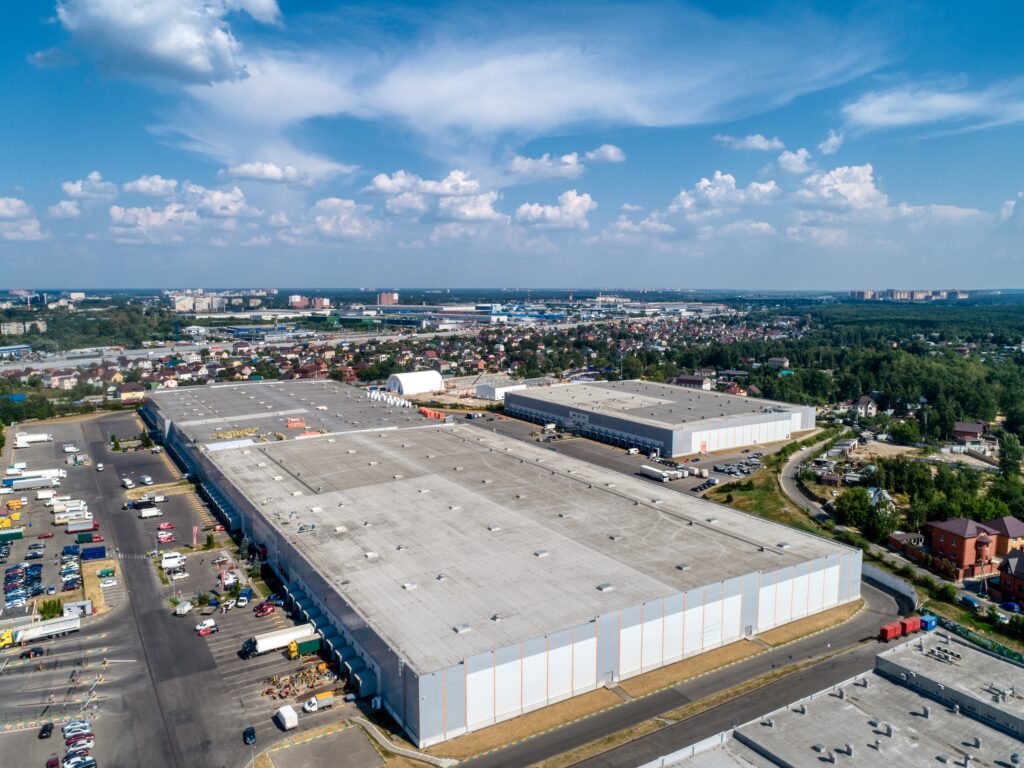
Richmond has long been a food and beverage town. Sauer's spice and extract operation has run on Broad Street for more than a century, the region carries a deep brewing and beverage trade, and bakery, snack, and commissary plants sit throughout the industrial belts along Commerce Road, Deepwater Terminal, and the corridors feeding I-95 and the Richmond Marine Terminal. These are working plants with real production pressure, and their roofs sit over food, so the standard is higher than a typical commercial building.
Materials Have to Pass the Food-Safety Plan First
A roof over a food contact zone is not a place to use whatever membrane is on the truck. USDA- and FDA-regulated areas restrict what goes overhead, and not every product or formulation qualifies. White TPO and PVC single-ply are generally acceptable above enclosed processing areas, but the specific product, and just as importantly the adhesives, primers, and sealants in the flashing details, have to be confirmed against the plant's food-safety plan before anyone installs anything. Plenty of standard roofing adhesives are solvent-based and have no business above a production line. We sort the acceptable list out with the plant's quality team up front so there are no surprises during an audit.
Refrigeration Changes the Whole Assembly
Freezer rooms, chill rooms, and blast-freezing areas are where the vapor problem gets serious. The roof above a refrigerated space has to keep the thermal and vapor control continuous so the cold chain inside is not fighting condensation forming in the deck above it. We design tapered insulation and vapor control around the actual operating temperatures of each space and the direction moisture wants to move in Richmond's humid summers. Get the dew point wrong and you build a slow-motion failure into the roof that nobody sees until the deck gives way. Drainage matters here too, because ponded water over a freezer adds thermal load to the refrigeration system and accelerates deck corrosion, so we slope water decisively to drains and scuppers.
Heavy rooftop loads
Processing plants stack weight on the roof: large make-up air units, refrigeration condensers, ammonia or glycol piping, and process equipment that a generic retail roof never carries. We confirm the deck and structure can take the insulation and equipment loads before we add to them, and we build curbs and supports that hold up under vibration and service traffic rather than working loose over a few seasons.
Sanitation Chemistry Works on the Roof, Too
The same aggressive cleaning that keeps a food plant compliant does not stay inside the building. Caustic and acid sanitation compounds, chlorinated cleaners, and the steam from hot washdown all rise toward the deck and vent out through roof penetrations, and over time that chemistry attacks fasteners, pipe boots, and any membrane in the exhaust plume. We account for it the way we would on any chemically loaded roof: corrosion-resistant fasteners, oversized and properly detailed flashings at washdown and cook exhaust, and a membrane chosen for the discharge it will actually sit under. On the interior side, where humidity is relentless, the vapor barrier and its continuity matter more than the top surface, because stopping moisture at the deck is what protects the structure underneath.
Sanitary Detailing and Pest Exclusion
Food-safety audits do not stop at the ceiling. Inspectors look at the roof line, the parapet, and every penetration for gaps that let water, birds, or pests into the building. We detail the perimeter and the curbs to close those paths: tight termination at parapets and walls, sealed penetrations with no open annular gaps, and edge metal that does not leave a ledge or a void where nesting starts. Drains get strainers and the scuppers get screened where the facility wants them, so the drainage that protects the roof does not become an entry point. These are small details, but on a food plant they are the difference between passing an audit and writing a corrective action.
The Production Schedule Drives the Work, Not the Other Way Around
Most Richmond plants run two or three shifts, and the only real opening is the weekly sanitation window. Any work that opens the envelope above an active line has to fit into that window, and it only starts after the production and quality team confirms the floor below is clean and protected. We build the phasing around the plant's calendar and the sanitation cycle, dry in each section before production resumes, and keep refrigeration maintenance in the loop whenever work touches a unit that could affect the cold chain. The plant should never have to choose between getting its roof fixed and shipping product.
When Water Gets In During Production
A leak over an active line is a food-safety event, not a maintenance ticket. It can mean a product hold and a documented investigation. We set up an emergency response for processing clients before it is ever needed: a 24-hour contact, priority mobilization for temporary dry-in, and documentation support the plant can fold into its own incident reporting. The goal is to stop the water fast and give quality the paper trail they need.
What We Bring to a Food Plant Roof
- Vapor and condensation design centered on your washdown and refrigeration realities, not a flat-roof template.
- Membranes, adhesives, and sealants confirmed acceptable for food production before installation.
- Tapered drainage that keeps standing water off the roof, especially over refrigerated rooms.
- Load-verified curbs and supports for heavy rooftop process and refrigeration equipment.
- Phasing tied to your sanitation windows and shift schedule, with dry-in before every restart.
- Condition documentation and repair records your QA team can produce during USDA or FDA inspections.
From a beverage line near the river terminals to a bakery or commissary off I-95, we roof Richmond food plants for the conditions inside the building. Call us for an assessment that starts with how your plant actually runs.
Talk to a Richmond commercial roofer
Tell us about the building and the issue. We will set up a roof walk and get you a clear, documented scope.