
Mixed Use Roofing in Richmond, VA
Commercial roofing for mixed-use buildings, urban infill developments, and live-work-play properties throughout Richmond, VA.
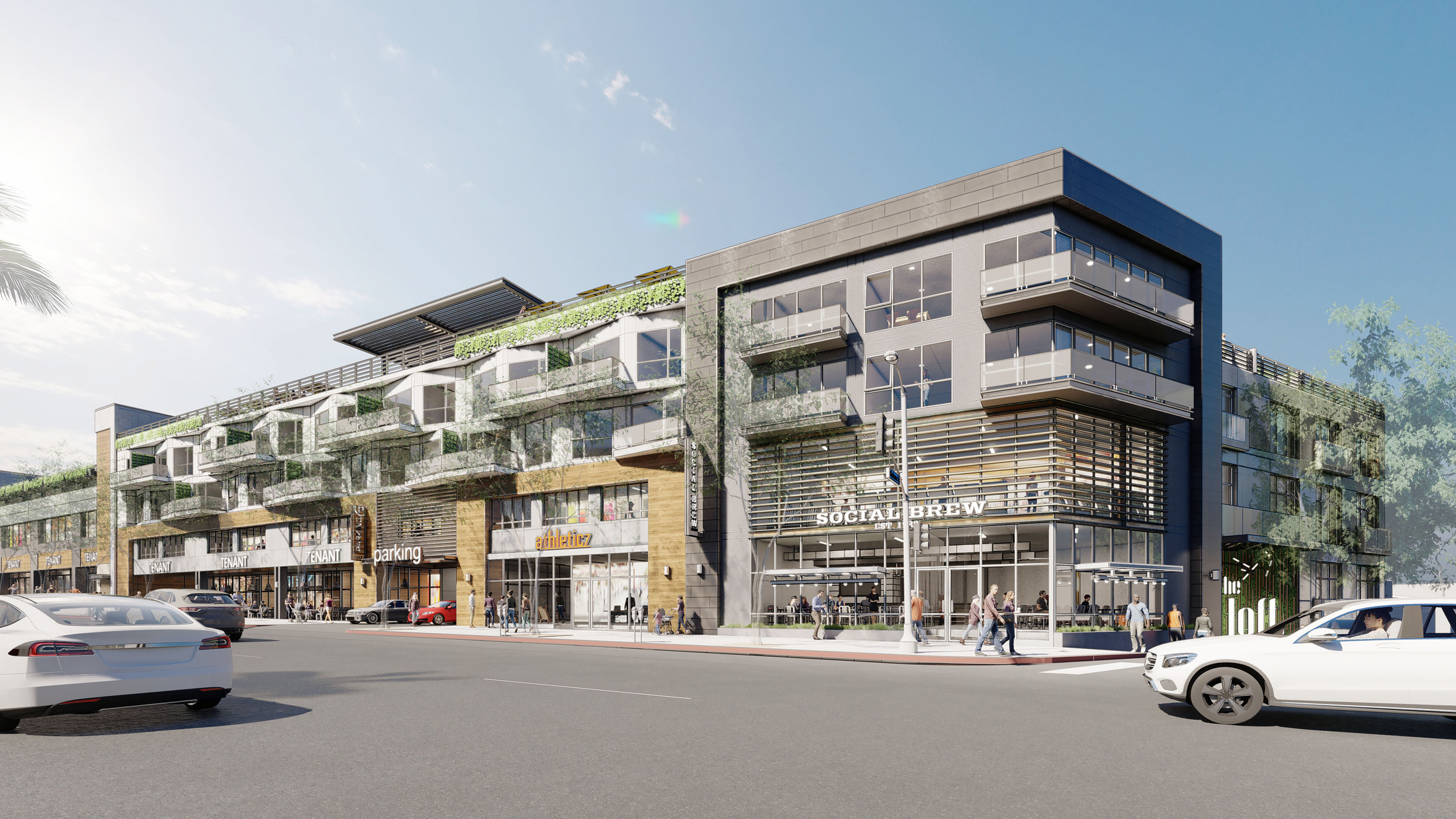
Richmond's Scott's Addition neighborhood has transformed from a mid-century industrial district into one of the Mid-Atlantic's most concentrated mixed-use infill zones, with craft breweries, coworking operators, fitness studios, and food halls occupying the ground floors of new and adaptively reused buildings topped by apartments and condominiums that have some of the strongest rental demand metrics in the city. That specific mix — food and beverage production at grade, residential above — creates a roofing challenge that sits at the intersection of industrial kitchen exhaust management, commercial waterproofing, residential vapor control, and rooftop amenity programming, all on building types that were never originally designed for this occupancy combination.
Virginia's climate classification places Richmond in a mixed-humid zone where both heating and cooling seasons are significant, and where the transition between them is rapid enough to create challenging vapor-drive reversal conditions within roof assemblies serving mixed-use buildings. Summer heat indexes regularly exceed 100°F in the James River basin, while January cold snaps bring temperatures below 15°F — a range of nearly 90 degrees that stresses every membrane material, flashing sealant, and adhesive bond in the roof assembly. For Scott's Addition mixed-use buildings where adaptive reuse of 1920s-1950s industrial structures is the dominant project typology, the existing structural deck adds a layer of material compatibility complexity: concrete over steel, wood plank over timber frame, and composite systems that require specific adhesion testing before a new membrane system is specified and applied.
Rooftop amenity programming has become a competitive differentiator in Richmond's mixed-use leasing market, with developers offering rooftop beer gardens, fire pit terraces, and fitness spaces that tap into the city's outdoor culture. The waterproofing beneath those decks must perform across Richmond's freeze-thaw cycle — which produces 40 or more freezing events annually at the building envelope — and resist the ice melt chemical exposure that comes with winter maintenance of occupied exterior surfaces. Protected membrane assemblies with pedestal-set concrete or composite pavers are the appropriate specification, and the drainage composite beneath the paver system must maintain flow capacity through Richmond's extended spring and fall rain seasons, which can deliver sustained rainfall over multiple days without the intense peaks that warrant oversizing for peak-intensity events alone.
The concentration of craft brewery and restaurant tenants in Richmond's mixed-use buildings creates specific roofing challenges that residential-over-retail buildings in other markets don't share at the same intensity. Commercial kitchen and fermentation exhaust from brewery and food hall operations exits through roof penetrations that must be maintained at defined clearances from combustible surfaces, sealed against both water infiltration and grease residue accumulation on adjacent membrane surfaces. The thermal and chemical environment around a brewery's fermentation exhaust stack — warm, humid, and carrying ethanol vapor — is corrosive to standard membrane flashing materials and requires specific collar materials: stainless steel or high-temperature-rated polymer, sealed with products rated for sustained exposure to warm wet air. Contractors who have worked on Scott's Addition projects understand these requirements; those who haven't will learn at the developer's expense.
Fire-rated assembly documentation in Richmond mixed-use buildings is processed through the City of Richmond's Permit and Inspections Center under the Virginia Uniform Statewide Building Code, which adopts IBC with state-specific amendments. The permitting process for mixed-use buildings with adaptive reuse components adds documentation complexity because the fire-resistance rating of the occupancy-separating roof-ceiling assembly must be demonstrated for the actual existing structural deck — which may not be the deck type in any standard UL listing. Virginia's State Building Code provides an equivalency pathway for demonstrating fire-resistance through engineering analysis when a tested assembly configuration is not feasible in the existing structure, and contractors who have navigated that pathway for Richmond adaptive reuse projects bring process knowledge that can save three to eight weeks of permit review time.
The James River flooding and Richmond's periodic tropical storm remnant events have elevated awareness of both wind uplift and ponding water risks on low-slope commercial roofs throughout the metro. For mixed-use buildings on the lower elevations of Scott's Addition and the Manchester neighborhood south of the river, rooftop drain sizing must account for rainfall intensities associated with tropical storm events that deliver several inches in an hour. Overflow scupper sizing, drain basin capacity, and the flow rate capability of the drainage composite beneath rooftop terrace systems should all be evaluated against Richmond's 100-year design storm intensity, not just the more commonly referenced 25-year event that governs standard commercial drain sizing.
Noise isolation is a well-understood concern in Richmond mixed-use buildings because the city's Scott's Addition experience has produced enough documented cases of acoustic conflict between brewery tap rooms, live music venues, and the residential tenants above them that developers, design teams, and property managers have internalized the lessons. Rooftop mechanical systems serving commercial tenants — particularly the large refrigeration compressors required for brewery production and food storage — are significant vibration sources that require spring-isolated curbs specified for the equipment weight and vibration profile. Projects where the commercial tenant's equipment schedule was known at design time and the acoustic engineer reviewed the isolation specification have a substantially better track record in Richmond's mixed-use market than those where acoustic isolation was treated as a value-engineered afterthought.
Green roof and sustainable roofing programs in Richmond have received increasing support from the city's sustainability office and align with the Chesapeake Bay watershed improvement goals that Virginia's Department of Environmental Quality enforces through local MS4 permit requirements. Mixed-use developments in Richmond's urban stormwater service area can earn credit for green roof retention that reduces impervious surface stormwater runoff — a credit with real financial value in a market where stormwater utility fees are a meaningful line item in building operating budgets. The growing medium, drainage composite, and root barrier specifications for Richmond green roofs should be designed for the Mid-Atlantic climate's freeze-thaw cycle and summer drought conditions, which require different parameters than green roof specifications developed for either the consistently wet Pacific Northwest or the consistently warm Gulf Coast.
Richmond's commercial roofing market has developed real expertise in adaptive reuse mixed-use work through the sustained activity in Scott's Addition, Manchester, and the Broad Street corridor. The contractors with the deepest relevant experience have completed multiple projects in those neighborhoods, have working relationships with the City's Permit and Inspections Center, and have developed standard assembly specifications for Richmond's climate and the building types most commonly encountered in the adaptive reuse pipeline. References from other Scott's Addition or Manchester developers, familiarity with Virginia's USBC equivalency pathway, and demonstrated experience with brewery and food hall exhaust penetration detailing are the specific qualifications that identify the right contractor for a Richmond mixed-use project.
- How should commercial brewery exhaust penetrations through roofs on Richmond mixed-use buildings be detailed?
- Brewery fermentation and process exhaust stacks require membrane collar materials rated for sustained exposure to warm, humid, ethanol-bearing air — stainless steel collars or high-temperature polymer systems rather than standard EPDM or TPO flashing. The collar should be sealed with a product rated for the exhaust stack's operating temperature and chemical environment, not a standard polyurethane caulk that will degrade within two to three years. Clearances from combustible roofing materials per the IMC must be maintained, and the penetration detail should be included in the mechanical engineer's coordinated drawings for review by the roofing contractor before installation.
- What roofing challenges are specific to adaptive reuse buildings in Scott's Addition?
- The 1920s to 1950s industrial buildings in Scott's Addition have structural decks of varying type and condition — often concrete on steel framing, sometimes wood plank over heavy timber — and existing roofing assemblies that may include asbestos-containing built-up roofing materials that require abatement before re-roofing. Substrate moisture investigation through infrared or nuclear gauge survey is essential before specification. The concrete deck systems common in older Scott's Addition buildings have high thermal mass that affects the dew-point behavior of the roof assembly and must be accounted for in the vapor design.
- What documentation does Richmond's Permit and Inspections Center require for mixed-use roof permits?
- Virginia's Uniform Statewide Building Code requires documented UL or FM listing numbers for occupancy-separating roof-ceiling assemblies, submitted with the building permit application. For adaptive reuse buildings where the existing structural deck cannot accommodate a standard tested assembly configuration, Virginia's USBC provides an equivalency pathway requiring an engineer-of-record analysis demonstrating equivalent fire-resistance performance. This equivalency review is handled by the State's Building Code technical staff and adds time to the permitting process that should be built into the project schedule rather than treated as a schedule contingency.
- How does Richmond's proximity to the Chesapeake Bay watershed affect stormwater requirements for mixed-use roofing?
- Virginia's MS4 stormwater permit requirements, which flow from the Bay watershed improvement goals, require that new development and substantial redevelopment in Richmond's regulated stormwater area demonstrate post-development stormwater management meeting specific runoff reduction targets. Green roofs contribute to meeting those targets and may allow developers to reduce the size and cost of required on-site stormwater management infrastructure. The stormwater credit calculation methodology should be reviewed with the civil engineer early in the design process to determine the optimal green roof area and system configuration for maximum stormwater benefit.
- What rooftop membrane system performs best in Richmond's mixed-humid climate for a new mixed-use building?
- White 60-mil TPO fully adhered over polyisocyanurate insulation is the dominant specification for new mixed-use construction in Richmond because it addresses the significant cooling load reduction need in hot humid summers while maintaining adequate thermal resistance for cold winters. The adhesive selection should be evaluated for compatibility with Richmond's high summer humidity, which can affect adhesion bond strength in water-based formulations. Vapor retarder placement should be based on a hygrothermal analysis for Virginia's mixed-humid climate zone 4A, not assumed from a standard cold-climate or hot-climate template.
Talk to a Richmond commercial roofer
Tell us about the building and the issue. We will set up a roof walk and get you a clear, documented scope.