
Government Building Roofing in Richmond, VA
Commercial roofing for city halls, courthouses, fire stations, police stations, and public facilities throughout Richmond, VA.
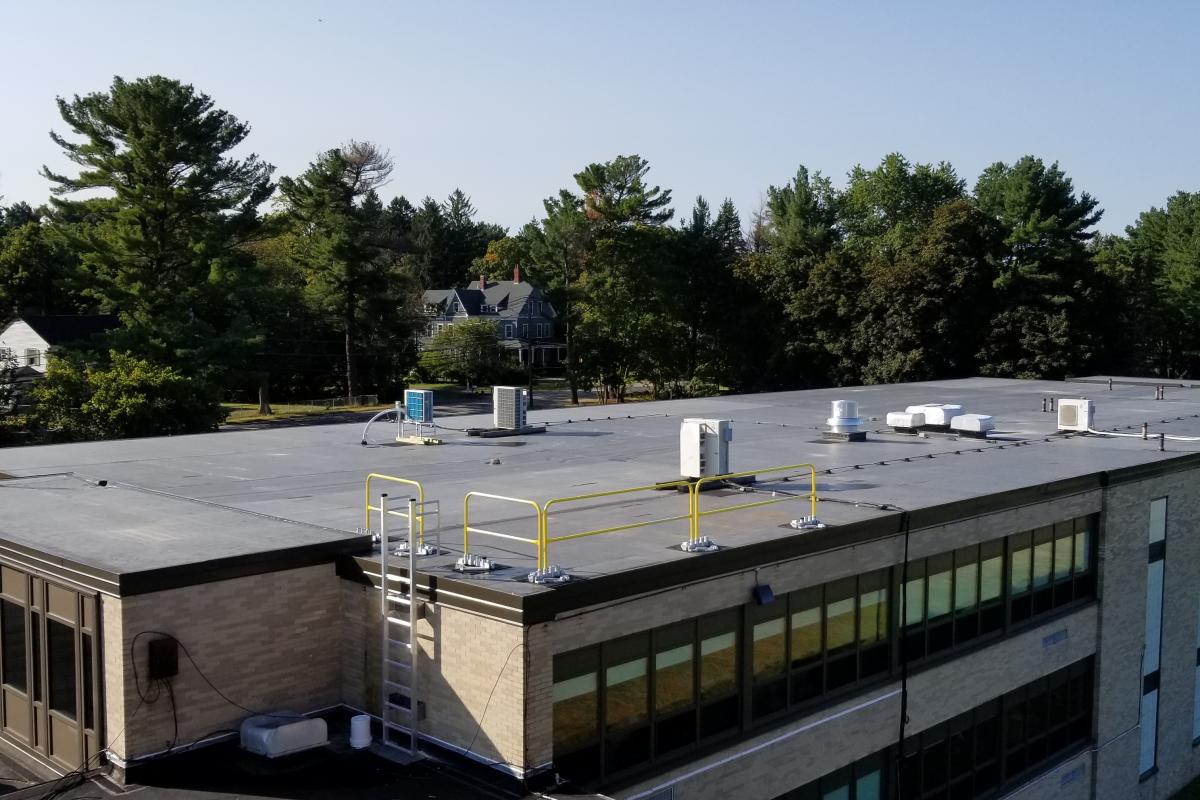
Richmond's climate sits at the northern edge of the humid subtropical zone, with summers that are genuinely hot and humid and winters that bring both ice storm events and periods of sustained freezing temperatures. Unlike cities further north, Richmond's winters are characterized by freeze-thaw cycling rather than continuous cold — the temperature crosses the 32-degree mark repeatedly through the winter season, creating expansion and contraction stress in roofing assemblies, particularly at metal flashing interfaces, masonry coping joints, and membrane field seam areas. The James River corridor creates localized weather patterns — river fog, elevated humidity, and occasional flooding events — that affect facilities in the Shockoe Bottom and Rocketts Landing areas. Emergency management facilities, police precincts, and fire stations in those areas must maintain function through weather events that can compromise less robustly specified buildings.
Virginia's construction licensing framework requires roofing contractors to hold a Class A or Class B contractor license from the Virginia Department of Professional and Occupational Regulation's Board for Contractors. The appropriate license class depends on project size — Class A is required for projects over $120,000. Richmond government contract specifications verify contractor license status as part of responsiveness review, and projects awarded to contractors with inactive or inappropriately classified licenses are subject to invalidation by the Department of Procurement Services. Beyond the state license, the City of Richmond requires business license registration within the city, and contractors working on Richmond government projects must have their city business license current as a condition of contract execution. These are administrative requirements that seem minor but have derailed bids from contractors who let them lapse.
Richmond's government buildings include several facilities of significance to the city's African American heritage and civil rights history, including the Maggie L. Walker National Historic Site — a federally managed property — and historic structures within the Jackson Ward Historic District, recognized nationally as the historic center of African American business and culture in the early 20th century. Reroofing projects on buildings within Jackson Ward that carry historic designation require coordination with the National Park Service for federally owned properties and with the Virginia DHR and Richmond CAR for locally designated buildings. Contractors proposing work in this context must demonstrate cultural sensitivity alongside technical competence — the community's relationship to these buildings means that project disruptions and visual impacts are scrutinized more carefully than on a generic commercial roofing job.
Henrico County's government facilities — the Henrico County Courthouse complex on East Parham Road, the county library system's branches across the county, and the Henrico County Police Division's precinct buildings — represent a procurement market closely adjacent to the City of Richmond but with distinct processes. Henrico County's Department of Finance and general services divisions manage construction procurement through the county's own portal, with competitive bidding required under Virginia's VPPA requirements. Henrico has grown rapidly in recent decades, with both new facilities construction and maintenance of an older portfolio of county buildings dating to the 1960s and 1970s that are now candidates for major reroofing. The county's fiscal management discipline — Henrico is known as one of the better-managed local governments in Virginia — means capital budgets are reasonably predictable, and contractors who track county CIP documents can anticipate project releases well before formal solicitations are issued.
The City of Richmond's sustainability goals, embedded in the RVAGreen 2050 sustainability plan, are beginning to influence municipal roofing specifications in the form of minimum insulation requirements, reflective membrane preferences for buildings with significant cooling loads, and a growing interest in green infrastructure connections to the city's combined sewer overflow management program. Richmond's Department of Public Utilities manages a long-term control plan for combined sewer overflows that includes green infrastructure components, and vegetated roof installations on city-owned facilities in targeted catchment areas can generate stormwater credit toward the city's CSO compliance obligations. Contractors who can spec and install compliant green roof assemblies — and who understand the maintenance obligations that follow — are positioned for a growing segment of Richmond's government roofing market.
- What Virginia contractor license is required to bid government roofing projects in Richmond?
- Virginia's Board for Contractors requires a Class A contractor license for projects over $120,000 and a Class B license for projects between $10,000 and $120,000. Roofing is covered under the general contractor license structure, and the appropriate license class must match or exceed the project value. Richmond city contracts verify license status through DPOR's online license lookup as part of bid responsiveness review, and contractors working under an improperly classified license are subject to enforcement action by DPOR.
- How does Virginia's 2020 prevailing wage law affect Richmond government roofing projects?
- Virginia's prevailing wage law, enacted in 2020 and phased in over subsequent years, applies to state-funded public construction projects over $500,000. The Virginia Department of Labor and Industry determines applicable wage rates using a Davis-Bacon-style survey methodology for each locality, and Richmond-area rates are published annually. Federal projects in Richmond trigger Davis-Bacon rates independently, and contractors must determine which set of rates applies — or whether both apply simultaneously — based on the specific funding sources for each project.
- What preservation review process applies to roofing work on Richmond's Jackson Ward historic buildings?
- Structures within the Jackson Ward Historic District that are locally designated require review by the Richmond Commission of Architectural Review before exterior alterations can proceed. For federally owned or federally funded projects, Section 106 consultation with the Virginia Department of Historic Resources and the State Historic Preservation Office is required. The Secretary of the Interior's Standards for Rehabilitation govern material selection and detailing, and proposed substitutions of modern materials for historic roofing must be documented as the least invasive feasible treatment.
- What weather events most commonly cause roofing failures on Richmond government buildings?
- Richmond's most damaging roofing events are winter ice storms — which concentrate along the I-95 corridor and create sudden loading on drainage systems and flashing terminations — and the late-summer tropical weather systems that move through the Virginia coast and piedmont. Freeze-thaw cycling through winter creates cumulative fatigue in masonry coping joints and metal flashing systems on older buildings, and deferred maintenance in those areas frequently leads to interior water intrusion during the spring rain season when roof loads are highest.
- How does Richmond's CSO long-term control plan create opportunities for government green roof projects?
- The City of Richmond's Department of Public Utilities is implementing a long-term control plan for combined sewer overflows that includes green infrastructure as one compliance pathway. Vegetated roofs on city-owned buildings within priority sewer sheds generate stormwater retention that counts toward green infrastructure volume credits in the LTCP. Roofing contractors who can design and install compliant green roof assemblies — with documented stormwater performance that satisfies the DPU's tracking requirements — are positioned for specifications that increasingly appear in city facility reroofing projects within those targeted catchment areas.
Talk to a Richmond commercial roofer
Tell us about the building and the issue. We will set up a roof walk and get you a clear, documented scope.