
Manufacturing Facility Roofing in Richmond, VA
Commercial roofing for manufacturing plants, assembly facilities, and industrial buildings throughout Richmond, VA.
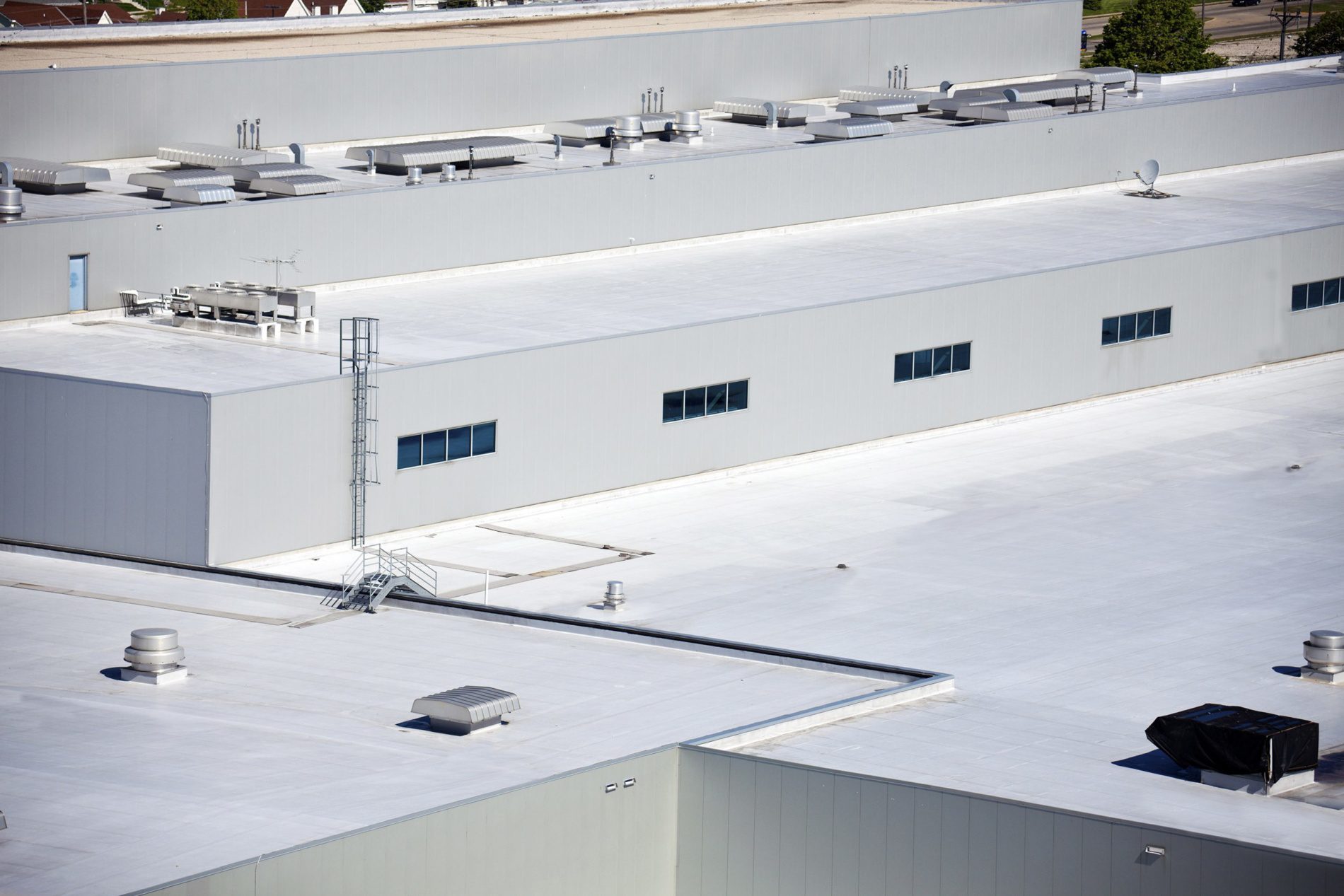
Richmond's manufacturing economy is rooted in a diverse industrial base that ranges from tobacco processing—Philip Morris USA's Manufacturing Center on Commerce Road remains one of the largest cigarette manufacturing facilities in the world—to specialty chemicals, defense electronics, and food and beverage production. The Philip Morris facility, covering over two million square feet of manufacturing and support space, exemplifies the scale of industrial roofing challenges that Richmond contractors must be equipped to manage.
Tobacco manufacturing generates a distinctive set of rooftop conditions. Tobacco dust, nicotine vapor, and humidification system exhaust combine to create a moist, organically rich environment at the rooftop membrane. Humidity control is central to tobacco manufacturing quality, and the HVAC systems that maintain precise humidity levels in processing areas discharge substantial moisture loads through rooftop exhausters. Roofing systems above tobacco processing areas must be selected for resistance to persistent moisture exposure and organic particulate deposition. EPDM membranes bonded with water-resistant adhesives perform reliably in this environment when properly maintained.
Specialty chemical manufacturing along the Richmond industrial corridor—including the DuPont and Olin Chemical facilities in the metro area—creates the more aggressive rooftop chemistry that characterizes chemical process manufacturing broadly. Acid vapors, organic solvents, and oxidizing compounds challenge standard membrane lap seams and adhesives. Roofing specifications for Richmond chemical manufacturing facilities should include third-party chemical resistance verification from the membrane manufacturer, and lap seam integrity should be verified with electrical conductivity testing after installation.
Vibration from Richmond's heavy manufacturing equipment—tobacco processing drums, chemical reactor agitators, packaging lines, and materials handling conveyor systems—creates the same attachment fatigue risk found at industrial facilities everywhere. Richmond's manufacturing buildings include both mid-century structures with concrete decks and modern tilt-wall construction, and each substrate type has different vibration transmission characteristics and fastener pullout values. Fully adhered membrane systems are the preferred choice for high-vibration manufacturing areas regardless of deck type.
Skylights appear regularly on Richmond's older manufacturing buildings, particularly those constructed in the industrial expansion period of the 1950s through 1970s. Wire-glass skylight panels in steel frames were the standard product for that era, and many of these assemblies are now beyond their service life. Re-roofing projects at these facilities often include skylight replacement—swapping original wire glass for contemporary polycarbonate multiwall or tempered glass units—which requires careful flashing integration between the new glazing and the new roofing membrane.
Richmond's climate is characterized by hot, humid summers and moderate winters with occasional ice events. The combination of summer heat, high relative humidity, and annual rainfall of approximately 44 inches creates conditions that support biological growth—algae, lichen, and mildew—on rooftop surfaces that retain moisture. Roofing membranes with algae-resistant formulations, combined with regular maintenance inspections that clear drain sumps and remove debris accumulation, reduce biological growth rates and extend membrane service life.
Schedule coordination for Richmond's large-scale manufacturing facilities requires project management capability that matches the facility's operational complexity. The Philip Morris campus, with its multiple interconnected manufacturing and support structures, represents a multi-year phased roofing program for any contractor that manages it comprehensively. Long-term maintenance agreements with defined inspection schedules, repair protocols, and condition reporting give large manufacturers the visibility they need to budget capital repairs accurately and avoid emergency spend.
Virginia's commercial building code aligns with the International Building Code and energy code provisions that drive roofing system performance requirements. Cool-roof reflectance requirements apply to low-slope roofs on commercial and industrial buildings, and Dominion Energy Virginia offers commercial efficiency rebate programs that can offset installation cost for qualifying high-reflectance membrane systems. Energy cost savings at large manufacturing facilities with extensive roof areas are meaningful contributors to the investment case for reflective membrane upgrades.
Richmond commercial roofing contractors for manufacturing facilities should hold Virginia Class A or B Contractor licensure, manufacturer authorization, and documented large-project industrial experience. References from multi-building phased industrial projects in central Virginia demonstrate the project management capability that major manufacturing clients require.
- What roofing system works best above tobacco and food processing areas in Richmond?
- EPDM with water-resistant adhesives or fully adhered TPO performs well in high-humidity process environments. Regular inspection and drain maintenance are essential because organic particulate deposition accelerates drain blockage and creates moisture retention zones that promote membrane aging.
- How are legacy wire-glass skylights handled during Richmond industrial re-roofing projects?
- Most project teams replace original wire-glass units with modern polycarbonate multiwall or tempered glass alternatives during re-roofing. New curb flashings integrate the replacement glazing with the new membrane, and the project typically uses this opportunity to add thermal breaks in the curb assembly to reduce condensation.
- What vibration-related roofing failures are most common at Richmond manufacturing facilities?
- Fastener pullout from mechanically attached systems is the most common failure mode. Cyclic vibration gradually loosens fasteners, creating tent points where membranes lift under wind loading. Converting from mechanically attached to fully adhered systems at problem areas is the reliable long-term solution.
- Does Richmond's climate require special attention to biological growth on industrial roofs?
- Yes. The combination of heat, humidity, and organic particulate from nearby manufacturing processes accelerates algae and lichen growth on rooftop membranes. Membranes with algae-resistant formulations, combined with annual cleaning and drain maintenance, manage this issue effectively. Ignore it and biological growth can mask membrane defects until they become leaks.
- What should a Richmond manufacturer look for in a commercial roofing contractor?
- Virginia Class A or B contractor licensure, manufacturer system authorization, documented experience on comparable industrial facilities, and references from large phased projects. For chemical process environments, verify that the contractor understands chemical resistance specification and has experience with the vendor qualification requirements common at regulated manufacturing sites.
Talk to a Richmond commercial roofer
Tell us about the building and the issue. We will set up a roof walk and get you a clear, documented scope.